As sadly anticipated in the previous article (here), the United States has intervened directly alongside Israel and bombed nuclear facilities in Iran.
JUNE 22
· The Facts
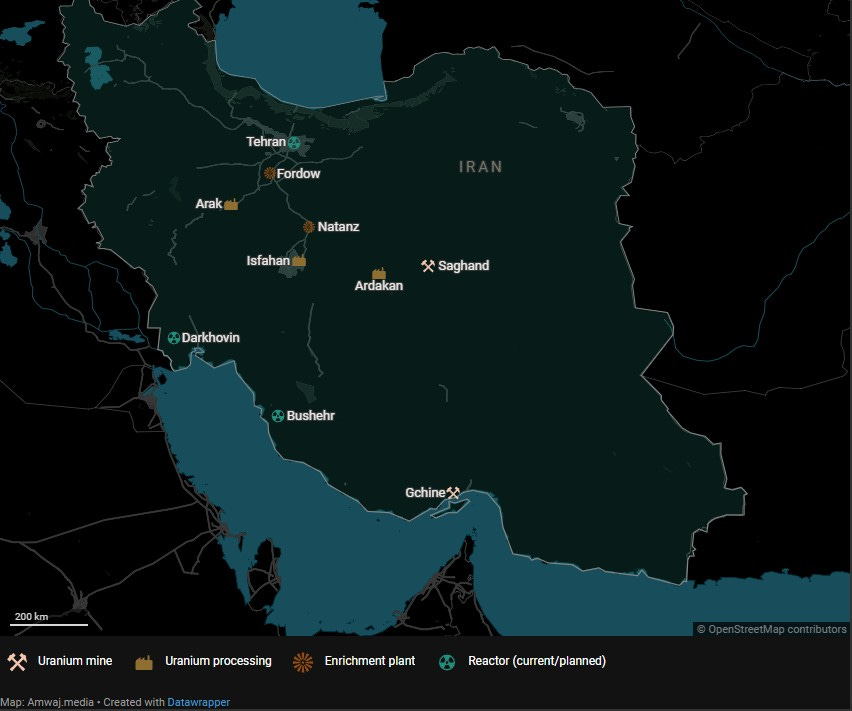
At 2:24 AM, President Trump announced via a post on Truth that the United States had attacked Iran’s three nuclear sites at Fordow, Natanz, and Isfahan.
Six B-2 bombers were deployed to strike the Fordow facility, while approximately 30 Tomahawk cruise missiles (launched from submarines) targeted the other two sites.
From the time of the attack to the announcement, about an hour passed during which no news leaked through any information channels.
Around 3:00 AM, Iranian state television reported that the nuclear facilities had been evacuated in advance and the uranium transferred to a secret location. Newly released satellite images appear to corroborate this.
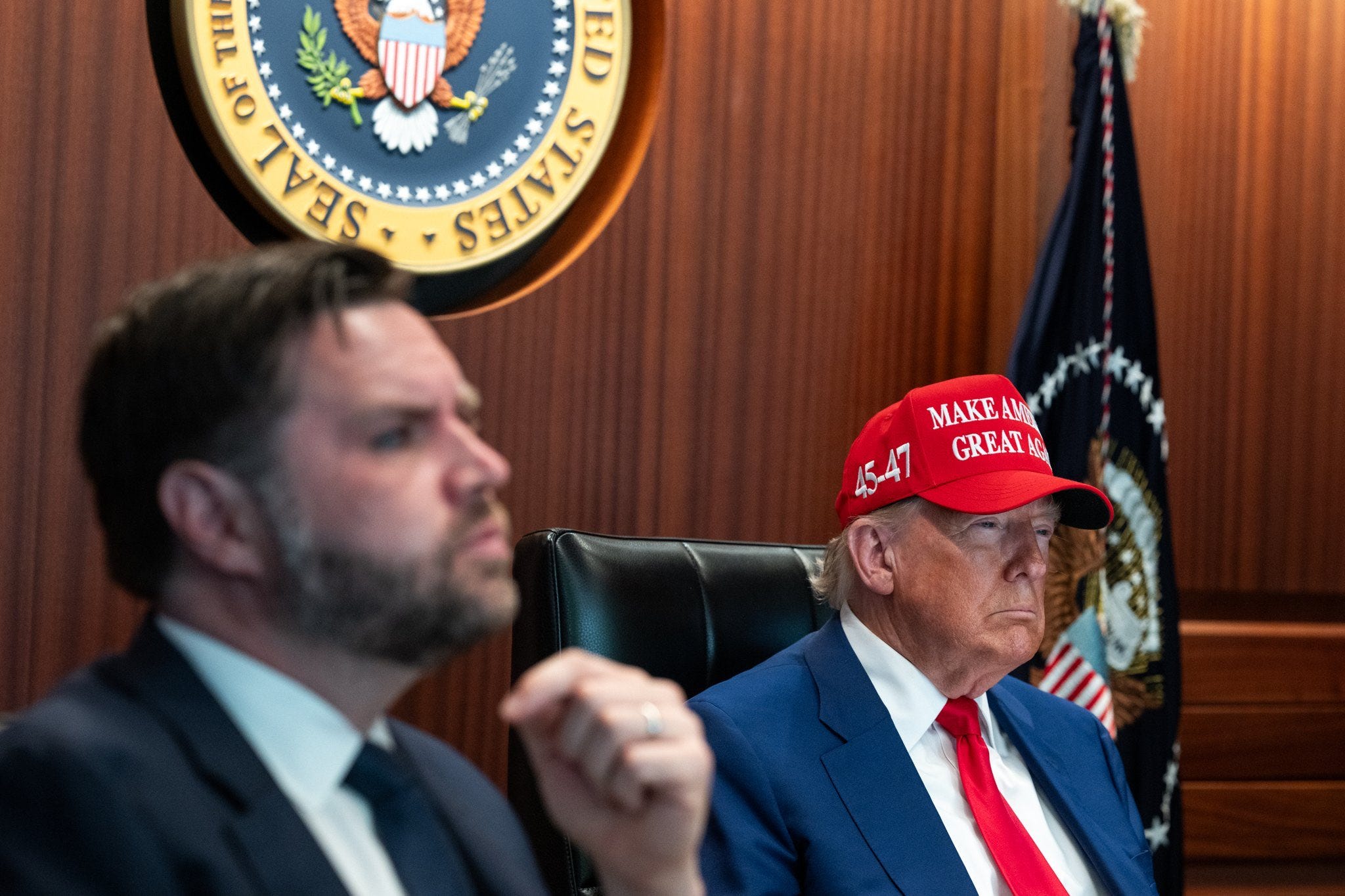
At 4:00 AM, President Trump (aka the peacemaker) told U.S. television networks that he had acted in full agreement with the Netanyahu government, had destroyed the three nuclear facilities, and had “invited” Iran to accept peace, warning that otherwise Tehran would face a tragedy. Shortly thereafter, Israel bombed southern Lebanon, just to keep things lively.
Iran’s initial reactions came via state television (the same one bombed the other day), while around 5:00 AM, a statement from Ayatollah Ali Khamenei vowed revenge. His Foreign Minister later specified that the response would be in accordance with the United Nations Charter (Article 51).
Meanwhile, the Houthis in Yemen declared they were at war and advised keeping ships away from their territorial waters.
Early in the morning, reports emerged that no increase in radioactivity levels had been detected at the three targeted sites, supporting claims that the uranium was moved in advance or that the bombs failed to breach the underground bunkers protecting Iran’s nuclear facilities.
Around 7:00 AM, Iran launched some 30 missiles at Israel, hitting Tel Aviv and Haifa, usual targets in these ten days of war. For the first time, one of Iran’s more advanced medium-range ballistic missiles, the Khyber—named after a 628 AD battle in which a Muslim army defeated a Jewish community—was used.
At 8:00 AM, Israel deployed its fighter jets for a series of strikes in western Iran.
No further military activities have been reported.
· Some Initial Reflections
Economic-Financial You’ll read everywhere about the closure of the Strait of Hormuz, through which about 30% of global maritime traffic passes, and the consequent spike in oil prices to $120–130 per barrel. As noted before, this no longer works that way: Wall Street finance and the central banks dependent on it still have the clout to keep prices under control, unless the situation spirals out of hand.
Technical Many experts claim the underground bunkers were not destroyed.
Iran’s air defences are still reeling from the Mossad’s blitz on the first day of the war. Despite the blows it has taken, Iran retains a strong capacity to strike Israel, thanks to its substantial missile stockpiles.
Israel’s air defence systems are increasingly stretched thin.
Illogical (in the author’s view)
In recent hours, all sorts of speculation have surfaced. Some suggest the United States warned Iran in advance, securing a commitment not to retaliate against U.S. bases in the Middle East. Others argue the attack is merely a pretext to provoke a harsh Iranian response, providing an excuse for full-scale involvement of Washington’s air force and navy. As for possible reactions from Russia and China, opinions are all over the place: pro-Iran voices are convinced they will intervene, while pro-Israel ones believe the exact opposite.
Logical (again, in the author’s view)
Presidents may change in the United States, but foreign policy remains locked into the post-9/11 framework outlined in the first article (here). Even Tulsi Gabbard, publicly opposed to bombing Iran, has been brought back into line, while the other sceptic, Steve Witkoff, hasn’t been heard from in days.
Netanyahu has more lives than a cat; for twenty years, everyone has been predicting his political demise, especially with the legal cases against him, yet the Israeli premier always manages to create situations that keep him in power.
Diplomacy in the West is dead and buried. Along with it, the credibility of nearly every government tied to NATO.
At this point, Iran is highly likely to pursue nuclear weapons as a serious deterrent against foreign interference, not to attack its enemies. Foreign Minister Araghchi is heading to Moscow, increasingly the crossroads of international disputes.
When Seymour Hersh writes, even at 88, it’s wise to read and take note. Two days ago, he foreshadowed what has now happened.
Conversely, when Europe makes any statement, it’s best to read it and forget it quickly. As the rest of the world does.
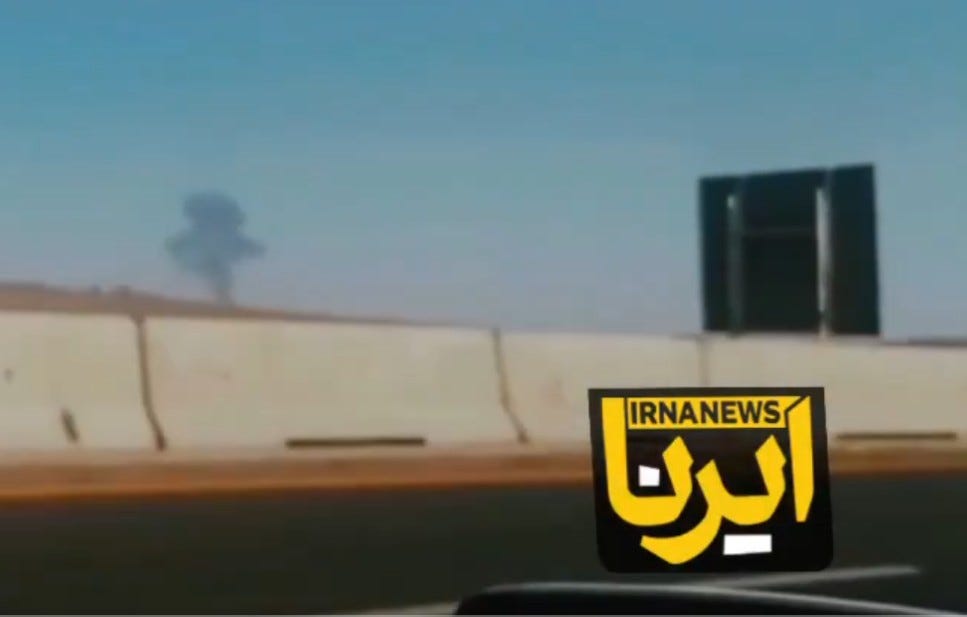
This is the only image of Fordow after the strike
JUNE 23/24
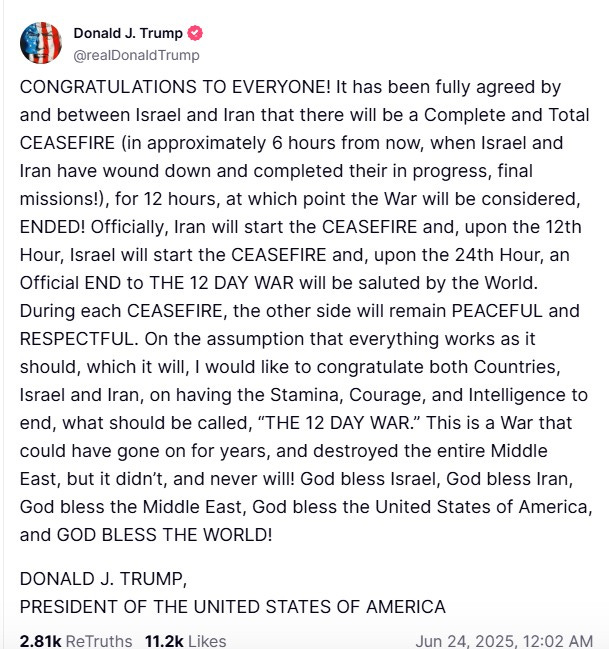
With this midnight announcement, President Trump congratulated both contenders, Israel and Iran, on the ceasefire and the end of hostilities.
Clear, simple, straightforward. Well, not quite.
· What Happened
Throughout yesterday, Iran and Israel exchanged relentless barrages, targeting military barracks, energy infrastructure, and government facilities.
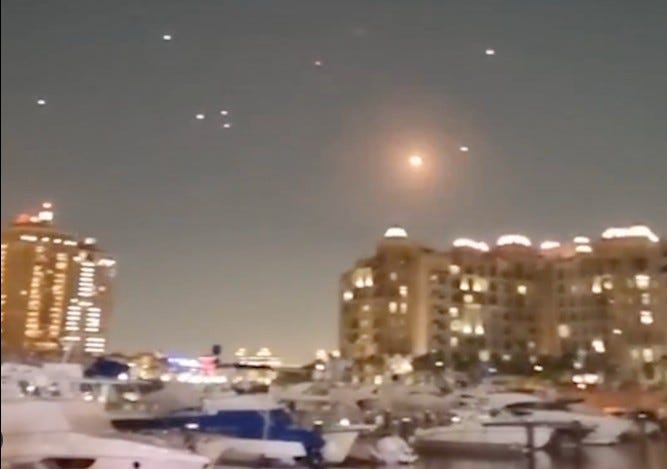
At seven in the evening, while Iran’s Foreign Minister was in Moscow, Tehran launched 14 missiles at the US Al-Udeid base in Qatar. Beyond the dramatic footage of missiles soaring over Doha’s skyscrapers and the usual flurry of statements from all and sundry, the strike had no impact. This was because the Iranians had tipped off Qatar in advance, which “suggested” to Washington that they move their aircraft to the Prince Sultan base in Saudi Arabia. And just when everyone was bracing for the customary nocturnal assaults, Donald Trump dropped a ceasefire announcement on his Truth Social platform, stirring no small amount of unease in situation rooms across the Middle East.
Everyone wondered: is this for real, or just another “Trumpism”? And, crucially, when exactly would this ceasefire kick in, given the post’s rather ambiguous wording?
Neither Israel nor Iran commented. Instead, they sprang into action; Tel Aviv’s government hammered Tehran until four in the morning, when the initiative shifted to Iranian missiles. Meanwhile, Foreign Minister Araghchi posted on X, declaring that if Israel halts its attacks, Iran would also bury the hatchet. And so it was, starting at six a.m.
By nine, the Israeli government also confirmed the end of hostilities.
· What People Are Saying
We’ve Won!
All the contenders are shouting it from the rooftops. And their supporters are right behind them. The key thing is that they’ve actually stopped fighting.
Trump’s cheerleaders (starting with the man himself) claim the US president has brought both Netanyahu and Ayatollah Khamenei to heel. Israel’s fans are toasting the obliteration of their enemy’s nuclear programme; Iran’s supporters are celebrating having forced their historic rival to stand down.
It Was All a Farce!
You’ll hear this a lot in the coming hours. It’s a bit like the mood in the financial markets (which, unsurprisingly, are climbing): as long as the Third World War doesn’t break out, everything’s fine, and the rest doesn’t matter.
The US bombings flattened a few surface structures, just enough to appease the lobbies and Tel Aviv. Iran’s response was purely symbolic, designed to satisfy its own people. A spectacle. If that’s the case, how will the third wheel in this drama react?
· What Really Remains of This Conflict
Ø Israel’s ability to strike anywhere, with precision and without hesitation. Indeed, the Mossad remains the world’s top intelligence service (alongside Britain’s MI6).
Ø The direct or indirect support that NATO countries and Gulf monarchies provide to Tel Aviv.
Ø Israel’s estimated 200 nuclear warheads.
Ø The Netanyahu government.
Ø The Pezeshkian government (and, more significantly, Khamenei).
Ø Iran’s underground military bases, stocked with missiles and drones.
Ø Iran’s underground nuclear sites, with 400kg of enriched uranium and state-of-the-art centrifuges.
Ø Trump’s unpredictability, characteristic of a gambler; for some, it’s his strength, for others, it undermines his credibility. Time will tell who’s right.
Ø The contrasting approaches of China and Russia to geopolitical tensions. Here in the West, everything must be resolved immediately, often without reflection; there, they work behind the scenes, moving slowly, even at the risk of being outmanoeuvred (as in Ukraine, for example). While the East places great importance on appearances, here they matter far less.
Ø Insecurity: no one is safe from attacks from the sky, whether by jets, missiles, or drones. Air defences can’t keep up with the times and come with (almost) unsustainable costs for everyone. Both Tel Aviv and Tehran will need to work hard on this front.
Ø The sense that this ceasefire is hanging by a thread, as the issue of Iran’s nuclear programme remains unresolved. Sooner or later, Iran will press ahead with its nuclear energy ambitions and rebuild its heavily damaged infrastructure; what will the US-Israel duo do then? Not to mention the doubt that the IAEA will be allowed to inspect sensitive sites again after what’s happened.
Ø The sense that this ceasefire is fragile until the root causes of the Middle East’s various conflicts are addressed: the Palestinian question, Shia-Sunni tensions, the borders arbitrarily drawn by the French and British in the early 20th century after the fall of the Ottoman Empire, and the ambiguities (to put it politely) of the Gulf monarchies and Turkey.
So, let no one cease to rely steadfastly on the good Lord!